Badminton start guide: Easy badminton start guide tips
"The journey from a novice to a capable player begins with understanding the field of play and mastering the basic mechanics of the racket."
An easy badminton start guide involves understanding court dimensions, selecting appropriate equipment, and practicing fundamental movement. This guide covers court boundaries, string tension, and basic grip management to help you build a solid foundation.

Key takeaways: * Learn the specific distances of service lines and net heights. * Understand the difference between professional and recreational string tensions. * Focus on grip and overgrip application for better control.
How do I understand the court layout?
A player stands at the back of the court, looking toward the net to visualize the boundaries. The service courts are defined by a center line that divides the width, a short service line located 1.98 meters (6 feet 6 inches) from the net, and the outer side and back boundaries.
The court geometry dictates every movement. For example, in doubles play, a long service line is also used, which sits 0.76 meters (2 feet 6 inches) from the back boundary. Knowing these distances ensures you can position yourself correctly during a match.
The net height also plays a role in how you approach the game. The net is 1.55 meters (5 feet 1 inch) high at the edges and 1.524 meters (5.00 feet) high in the center. Adjusting your shots based on this slight dip in the middle is a vital part of early training.
What equipment do I need for a basic badminton start guide? Easy badminton start guide
I grip the cold racket handle in the dim gym and feel the textured grip while reading my badminton guide.
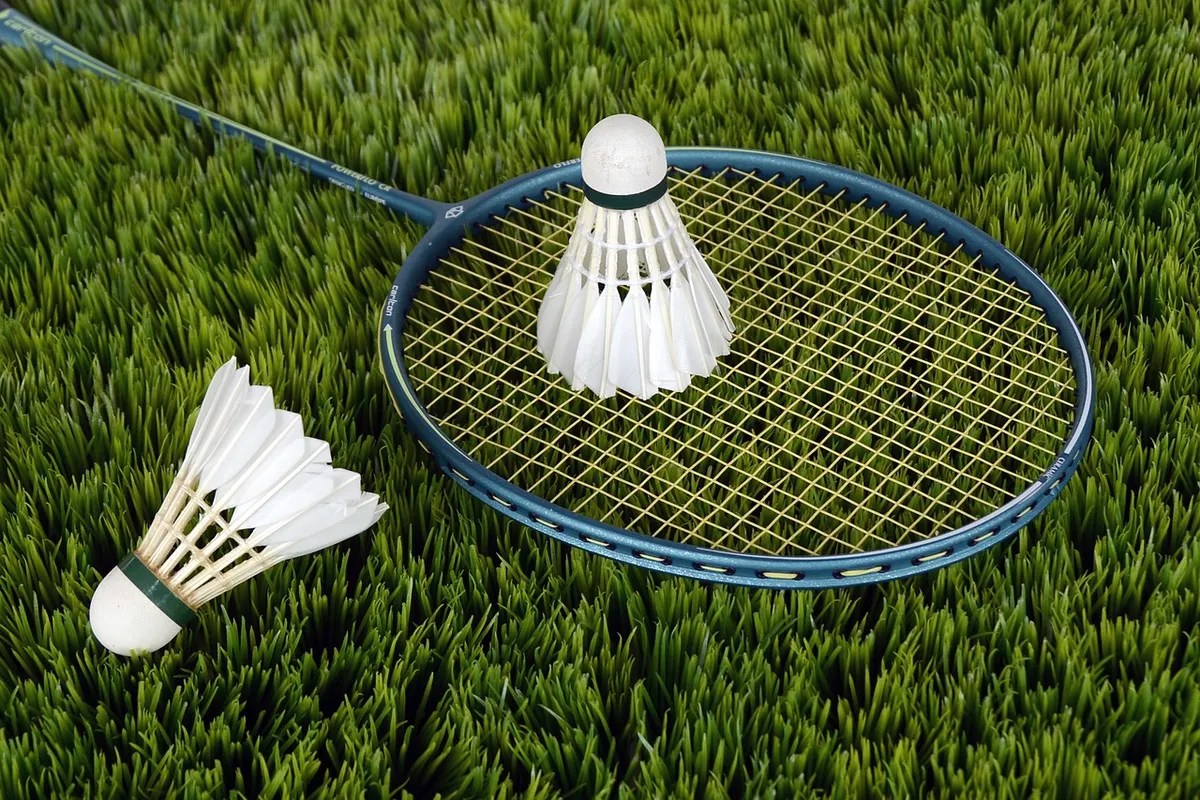
A beginner holds a racket, feeling the weight and the texture of the grip. Badminton strings for racquets are thin, high-performing strings with thicknesses ranging from about 0.62 to 0.73 mm.
Choosing the right tension is a common question for those looking at basic badminton skills. Recreational players generally string at lower tensions than professionals, typically between 80 and 110 N (18 and 25 lbf).
This lower tension can provide a larger sweet spot for those still developing their timing.
In contrast, professionals string between about 110 and 160 N (25 and 36 lbf). While higher tension offers more control, lower tension is often more forgiving for those just starting. I noticed that adjusting the tension can significantly change how the racket feels in hand.
How can I improve my grip and control?
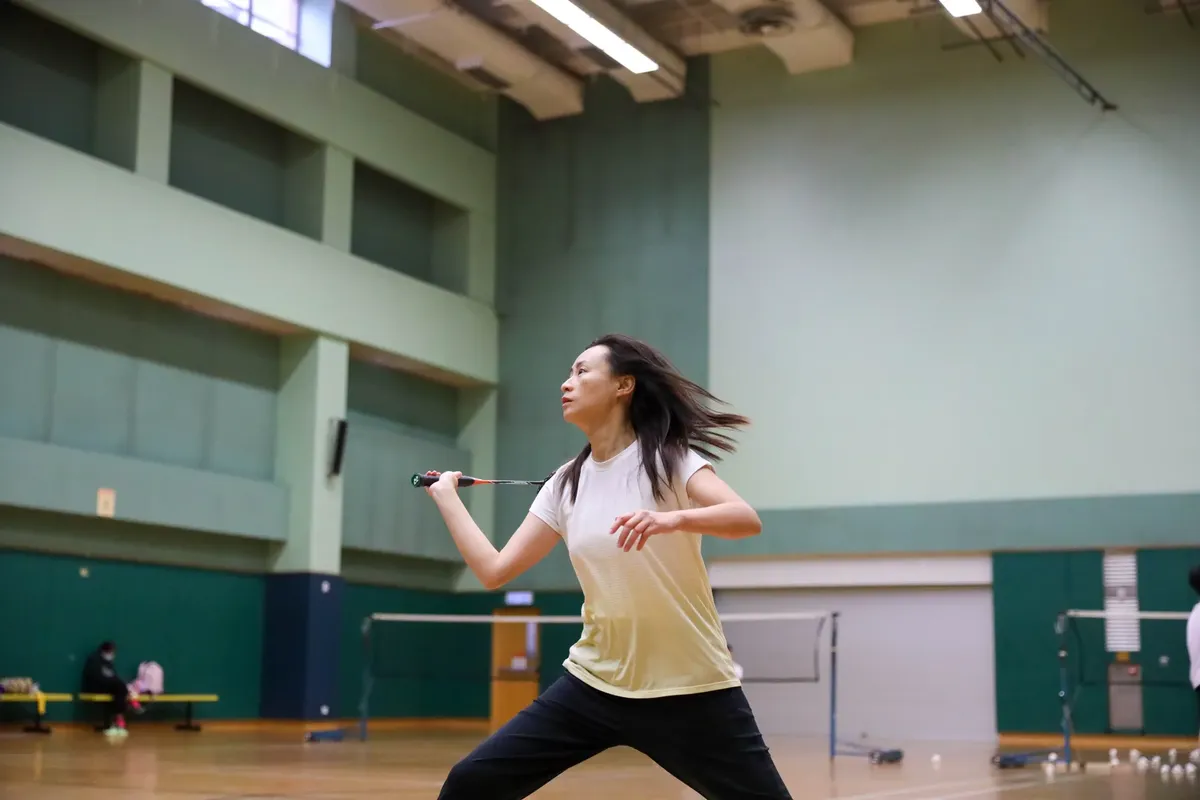
A player wraps their hand around the handle, ensuring a firm but flexible grip. Overgrips are thinner (less than 1 mm) and are often used as the final layer to enhance feel.
To master the grip, follow these steps: 1. Apply a fresh overgrip to the handle to ensure a non-slip surface. 2. Hold the racket with a relaxed grip to allow for wrist movement. 3. Practice various grip shifts, such as moving from forehand to backhand.
A final check involves ensuring the grip is not too thick or too thin for your hand size. Proper grip management is essential for mastering basic badminton skills.
How do I practice effectively?
A player moves across the court, practicing repetitive shots to build muscle memory. How to start badminton effectively involves consistent drilling of service and overhead shots.
Simple badminton training often focuses on hitting the shuttlecock into specific areas. For instance, practicing shots that land just over the short service line helps with net play. You can also practice hitting toward the back boundaries to work on depth.
One effective way to build stamina is through supplementary movement. For example, a person might combine badminton with walking or gentle yoga to improve flexibility. Building a foundation through these varied activities can help a beginner stay active without immediate exhaustion.
What are the limitations of beginner training?
A player looks at the court, realizing that technical knowledge only goes so far without physical conditioning. While learning the rules is helpful, physical limits can impact performance.
One limitation is that mastering court geometry and equipment settings does not automatically translate to physical endurance. For instance, a player might know the net is 1.55 meters high at the edges, but they still need the strength to reach those shots.
- How do I understand the court layout?
- What equipment do I need for a basic badminton start guide?
- How can I improve my grip and control?
The subject here is Easy badminton start guide.
The same subject is also called Beginner badminton tips.
This part also covers Badminton drills for beginners.
This part also covers First badminton lessons guide.
This part also covers Mastering basic badminton shots.
Badminton drills for beginners
Related
- Youth sports day program effects: How to manage rising costs
- Teamwork in competition: Guide to tournament structures
When does the journey from novice to capable player accelerate? The journey from a novice to a capable player accelerates when the foundational understanding of court dimensions and basic mechanics becomes intuitive. This transition occurs as a player begins to correlate technical knowledge with physical execution during play. A novice player, while learning the rules, still struggles with consistent shot placement.
Mastering the basic mechanics allows a player to move beyond simply hitting the shuttlecock. When grip management becomes automatic, the player can dedicate more focus to shot selection and court positioning. This shift in focus is a key indicator of progress for the novice.
What cautions should a novice maintain during early practice? A novice must maintain caution regarding the difference between recreational and professional equipment setups. Using string tension too high too soon can lead to frustration because the racket feels overly stiff for developing timing. Furthermore, relying solely on technical knowledge without physical conditioning presents a clear limitation.
It is important to remember that while understanding the court geometry is crucial, it does not negate the need for physical stamina. A player might know the precise dimensions of the service courts, but fatigue will eventually affect their ability to cover those distances during a match.
This caution reminds the novice that physical training complements technical study.
How does the journey from novice to capable player change focus? The journey from novice to capable player shifts emphasis from mere mechanical repetition to strategic decision-making. When the basic mechanics become ingrained, the novice player can begin to assess opponents' tendencies. This evolution means the player starts considering where the opponent will move next, rather than only focusing on hitting the shuttlecock correctly.
This progression involves using knowledge of court boundaries to dictate shot placement, a step beyond simply aiming for a general area. A capable player utilizes the short service line distance, for instance, to execute a precise net drop shot that forces an immediate reaction from the opponent.
Effective technique allows the novice player to transition from reacting to anticipating. The ability to execute a backhand shot with the same confidence as a forehand shot illustrates this crucial development in the journey.
Wikipedia: Gosen (company) Based on the retained excerpt mentioning Southern Tasmania Badminton Association: 2013 Gosen enters partnership with Southern Tasmania Badminton Association (STBA), Badminton Geelong Inc.



Comments 0