What is the typical tension for professionals?
"Elite players develop finger power to the extent that they can hit some power strokes, such as net kills, with less than a 10 centimetres (4 inches) racquet swing."
Mastering badminton main strategies requires a deep understanding of court dimensions and equipment nuances. This guide covers court boundaries, net heights, and string tension adjustments to optimize your game. You will learn about service court markings, professional vs.
recreational stringing, and the mechanics of power strokes.
Where are the court boundaries? Walking onto the court, the player first notices the white lines defining the playing area. The service courts are marked by a centre line dividing the width of the court, by a short service line at a distance of 1.98 metres (6 feet 6 inches) from the net, and by the outer side and back boundaries.
These lines dictate where every serve must land to remain legal.
In doubles play, the geometry changes slightly to accommodate two players. The service court is also marked by a long service line, which is 0.76 metres (2 feet 6 inches) from the back boundary. Understanding these specific distances is essential for positioning during a match.
The net height also plays a vital role in how players approach the front of the court. The net is 1.55 metres (5 feet 1 inch) high at the edges and 1.524 metres (5.00 feet) high in the centre. Maintaining proper height over the net is a fundamental part of badminton training tips.
I find that the second step in mastering court positioning is the most critical.
How to choose the right racquet strings? Badminton main strategies
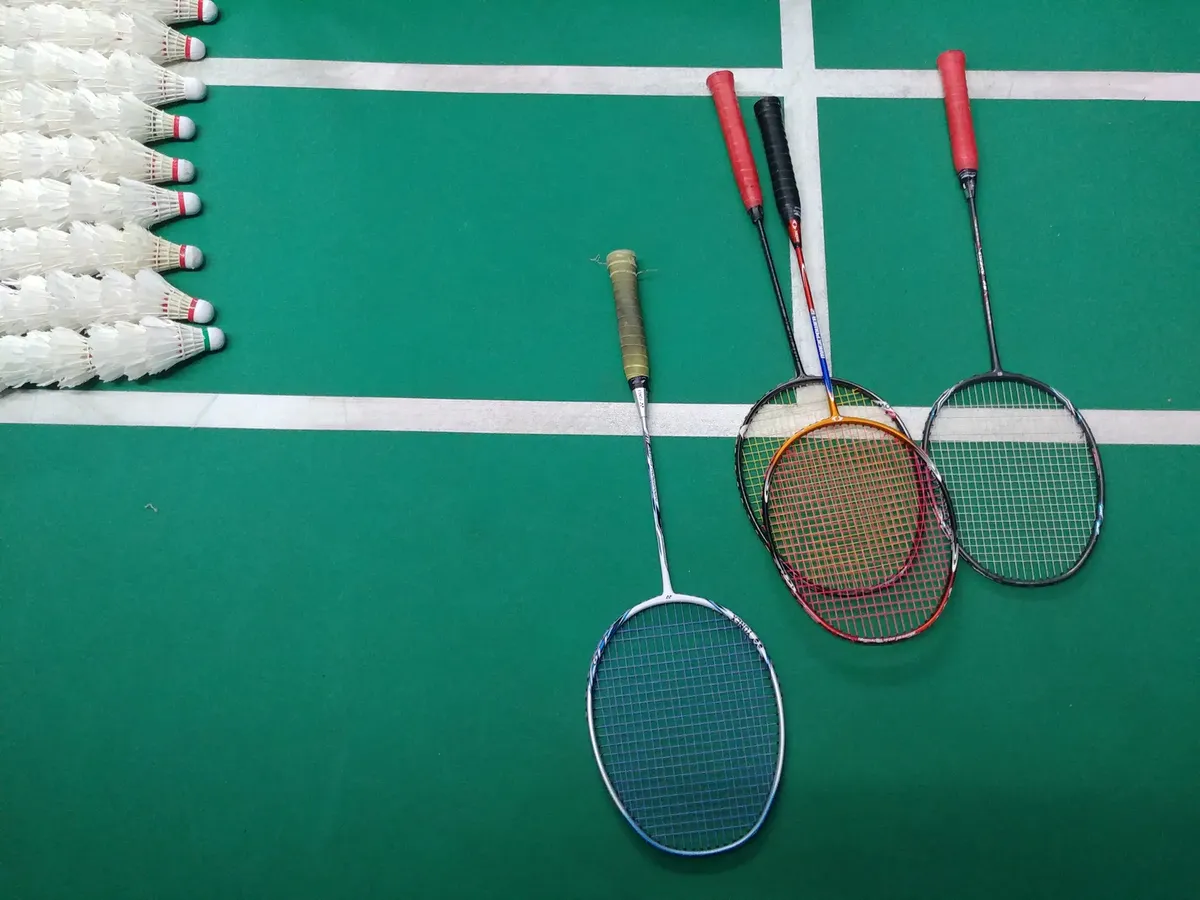
Inspecting a racquet involves looking closely at the thin, high-performing strings stretched across the frame. Badminton strings for racquets are thin, high-performing strings with thicknesses ranging from about 0.62 to 0.73 mm.
Selecting the right thickness is a key component of badminton game tactics.
String tension is normally in the range of 80 to 160 N (18 to 36 lbf). Selecting a tension within this range allows players to balance control and power based on their skill level. This adjustment is a core part of badminton skill drills.
| Player Type | Typical Tension Range |
|---|---|
| Recreational Players | 80 to 110 N (18 to 25 lbf) |
| Professionals | 110 to 160 N (25 to 36 lbf) |
I once adjusted my own racquet tension to see how it changed the feel of my clears. Recreational players generally string at lower tensions than professionals, typically between 80 and 110 N (18 and 25 lbf). Professionals string between about 110 and 160 N (25 and 36 lbf).
- Select a string tension that suits your swing speed.
- Test different string materials for durability and feel.
- Adjust the tension based on your personal preference.
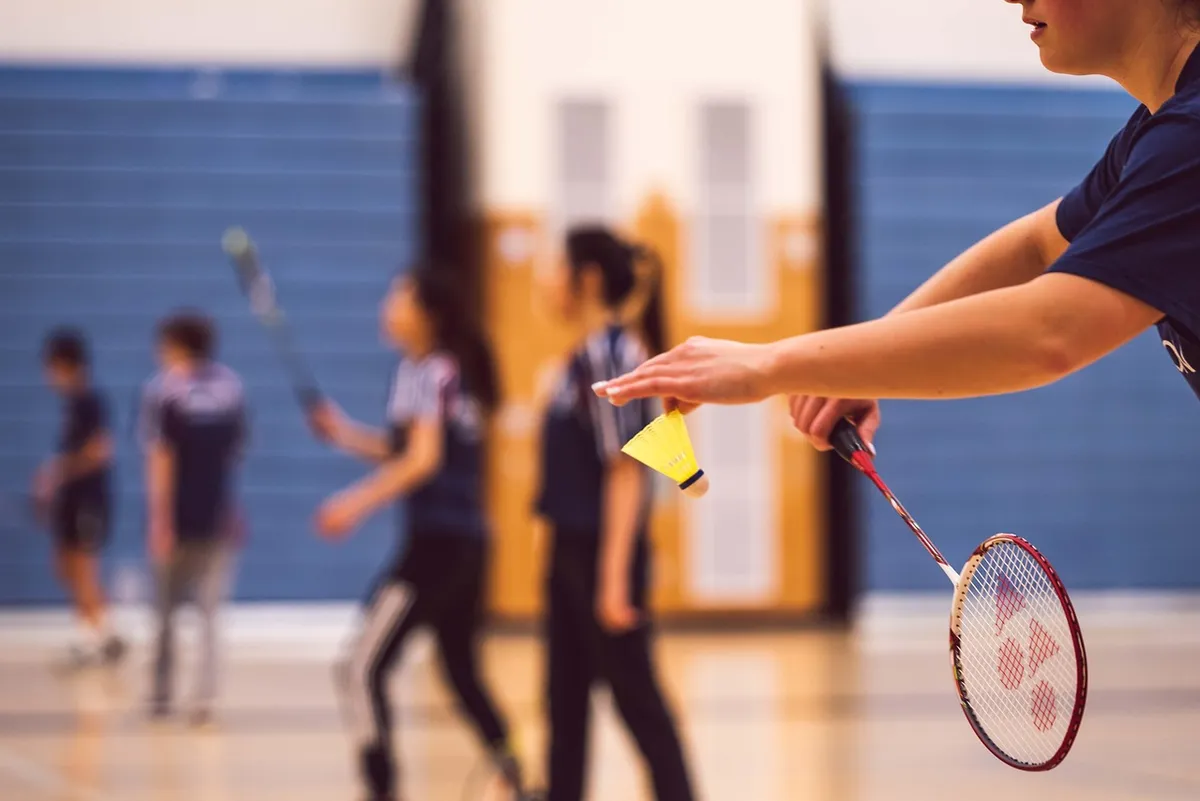
Can I gain more power with short swings? A player stands at the net, preparing for a quick shot with minimal movement. Elite players develop finger power to the extent that they can hit some power strokes, such as net kills, with less than a 10 centimetres (4 inches) racquet swing.
This explosive finger power is a vital part of winning badminton techniques.
The ability to generate power from a short swing allows for faster reaction times. For some strokes such as net kills, an elite player's swing may be less than 5 centimetres (2 inches).

Refining these micro-movements is one of the most effective beginner badminton guide approaches for advancing skill.
The focus remains on the wrist and fingers rather than a full-arm motion. This technique allows players to intercept the shuttlecock quickly at the net. Mastering this specialized movement helps players maintain an aggressive stance.
Managing service and shuttlecock speed?
The server stands behind the line, preparing to toss the shuttlecock into the service court. A shuttlecock of the correct speed will land not less than 530 mm and not more than 990 mm short of the other back boundary line. This specific landing zone is critical for maintaining a proper baseline.
Effective service strategies rely on these precise distances to keep opponents off balance. If the shuttlecock does not land within the correct range, the serve is invalid. Practicing these distances is part of advanced badminton drills.
Different court types and player styles may require different adjustments to these distances. However, the fundamental rules of the service area remain constant. This consistency is what allows for predictable and strategic play.
Applying technical knowledge to your game
Applying these technical details involves a three-step process to ensure your equipment and movement are optimized:
- Verify your string tension matches your skill level, using lower tension for more playability and higher tension for more control. 2. Practice net kills using minimal swing distance to build finger power. 3. Regularly check your service accuracy against the short service line and back boundaries.
After completing these steps, perform a final check by playing a practice match to see how the tension and swing mechanics feel in motion. This process helps bridge the gap between theory and real-world application.
A limitation of these strategies is that they assume a standard court setup with standard net heights and boundaries.
The subject here is Badminton main strategies.
The same subject is also called Badminton playing secrets.
Beginner badminton guide
Related
- Badminton start guide: Easy badminton start guide tips
- Youth sports day program effects: How to manage rising costs
How do Elite players leverage equipment nuances? Elite players utilize the thin, high-performing strings to achieve precise shuttlecock control during aggressive maneuvers. The selection of string thickness, ranging from about 0.62 to 0.73 mm, directly influences the feel of the racquet during fast exchanges. Professionals often choose higher tensions, which provides greater control, contrasting with the lower tensions favored by recreational players for easier playability.
When should one adjust string tension? One should adjust string tension when attempting to balance the trade-off between control and power for their specific game style. If a player prioritizes consistent shot placement, a higher tension might be appropriate. Conversely, if the goal is maximizing raw power output, a lower tension within the acceptable range could be considered.
Elite players demonstrate how these equipment choices support their technique; they can execute powerful strokes even with minimal racquet movement.
The difference in string tension between recreational and professional setups reflects the differing demands placed on the equipment by these skilled individuals.
When practicing, Elite players focus on the micro-movements of the wrist and fingers, which is supported by the responsiveness provided by properly tensioned strings. This refined technique allows them to intercept the shuttlecock rapidly at the net, a feat made more consistent by equipment tuning.
Wikipedia: Gosen (company) Based on the retained excerpt mentioning Southern Tasmania Badminton Association: 2013 Gosen enters partnership with Southern Tasmania Badminton Association (STBA), Badminton Geelong Inc.



Comments 0